Strait of Hormuz: How a Distant Oil Chokepoint Is Disrupting Indian Restaurants (From Crude to LPG)
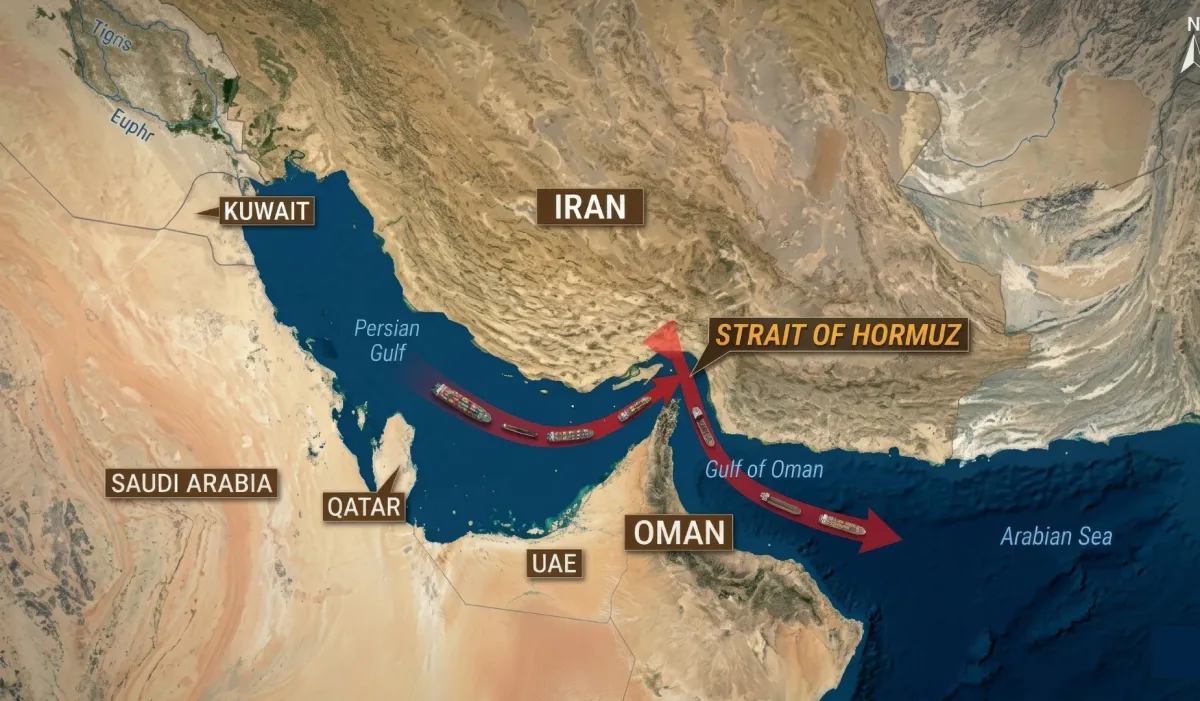
The Strait of Hormuz, a 33-kilometer-wide corridor between Iran and Oman controls roughly 20% of global oil and a quarter of global LNG and LPG flows, and when tensions flare there, Indian importers feel the squeeze within days. If your business has faced LPG shortages, freight surcharges, or delayed shipments in early 2026, one major reason is what's happening 2,500 kilometers away in the Persian Gulf.
A Narrow Strait
The Strait of Hormuz is the world's most critical oil chokepoint, sitting between the Persian Gulf and the Arabian Sea. It connects major oil and gas producers like Saudi Arabia, Iraq, UAE, Kuwait, Qatar, and Iran to global markets, carrying approximately 20.1 million barrels per day of petroleum liquids in Q1 2025, representing 27% of all maritime oil trade.
Geography, Traffic and Global Importance
The Strait of Hormuz is only 33 kilometers wide at its narrowest point, making it easy to disrupt but impossible to bypass for ships leaving the Persian Gulf. It connects the Gulf to the Gulf of Oman and onward to the Arabian Sea, serving as the only maritime exit for landlocked Gulf oil producers.
Who Uses the Route
Major exporters include:
- Saudi Arabia (largest crude exporter globally)
- Iraq, UAE, Kuwait (major crude and LPG suppliers)
- Qatar (world's leading LNG exporter)
- Iran (despite sanctions, still a significant crude exporter)
How a Distant Oil Chokepoint Is Disrupting Indian Importers (From Crude to LPG)
If you're seeing LPG shortages affecting restaurants in Bengaluru or Mumbai today, one reason is what's happening thousands of kilometres away in the Strait of Hormuz. This narrow waterway between Iran and Oman, through which roughly 27% of global maritime oil trade and massive volumes of LNG and LPG flow, has become a chokepoint that can disrupt Indian supply chains overnight.
Comparison: Hormuz vs Malacca
India's Dependence on Hormuz: Crude, LNG and LPG
India imports approximately 88% of its crude oil, and 50–60% of those imports transit through the Strait of Hormuz from major suppliers including Iraq, Saudi Arabia, the UAE, and Kuwait. In absolute terms, around 2.5–2.6 million bpd (nearly half of India's total crude imports of 5 million bpd) depend on this single waterway.
LNG and LPG
India's dependence on Hormuz is even more acute for cooking and industrial gas:
- LPG: India imports about 60–65% of its LPG consumption. Of those imports, more than 90% come from West Asia and transit Hormuz. This means roughly 55–60% of India's total LPG demand ultimately depends on a single chokepoint.
- LNG: About 50–60% of India's LNG supplies also pass through Hormuz.
This is not just an energy story, it's a supply chain and cost story. When one shipping lane closes, the ripple effects hit customs duty calculations (CIF value spikes), freight costs, working capital, and inventory planning for thousands of Indian importers across sectors.
India's 2026 LPG Shortage and What It Means?
In late February and early March 2026, the Iran-Israel-US conflict effectively blockaded Hormuz, stranding LPG cargoes and halting normal sailing schedules.
Visible effects included:
- Commercial LPG shortages affecting hotels, restaurants, and food delivery platforms in Bengaluru, Chennai, and Mumbai.
- Reports of 50% of Mumbai restaurants and 90% of Bangalore restaurants preparing to shut down due to lack of commercial cylinders.
- Households initially shielded because the government prioritised domestic cylinders over commercial use.
Government and OMC Response
The Indian government acted swiftly:
- Directed refineries to increase LPG output by 10% and run at full capacity.
- Invoked the Essential Commodities Act, 1955 to prioritise LPG allocation for households, hospitals, and key sectors, commercial users were pushed down the queue.
- Extended the refill lock in period from 15 to 25 days to curb hoarding and ensure equitable distribution.
- Secured LPG shipments from Algeria, US, Canada, Australia, and Norway through international portfolios of firms like Adnoc (UAE) and Sonatrach (Algeria).
- By mid-March, 70% of India's crude imports were secured from sources outside Hormuz, exceeding the typical volume that would have transited the strait.
The Practical Takeaway
You can't control geopolitics, but you can control how exposed your supply chain and contracts are to a chokepoint like Hormuz. Diversification, bonded warehousing, insurance planning, and flexible contracts are no longer optional, they're core risk management for any importer serious about resilience.