India Import-Export Weekly Roundup: February 10, 2026
This week marks a historic turning point for Indian trade as landmark agreements with the US and EU coincide with structural domestic logistics reforms. These developments are set to drastically lower transaction costs and open unprecedented market access for Indian manufacturers and service providers.
1. New India-US Trade Pact Framework Slashes Reciprocal Tariffs to 18%
India and the United States have established a preliminary trade framework aimed at reducing market barriers and enhancing economic security. This agreement is expected to significantly lower the cost of cross-border commerce while securing a massive $500 billion commitment for American purchases over the coming years.
- Reciprocal tariffs on Indian industrial and agricultural exports to the US will drop from 25% to 18%.
- India has committed to purchasing $500 billion worth of American energy, tech, and agricultural goods to balance trade.
- Strict new rules of origin will be implemented to ensure that trade benefits remain exclusive to Indian and American businesses.
2. Government Launches Bharat Container Shipping Line to Slash Export Freight Costs
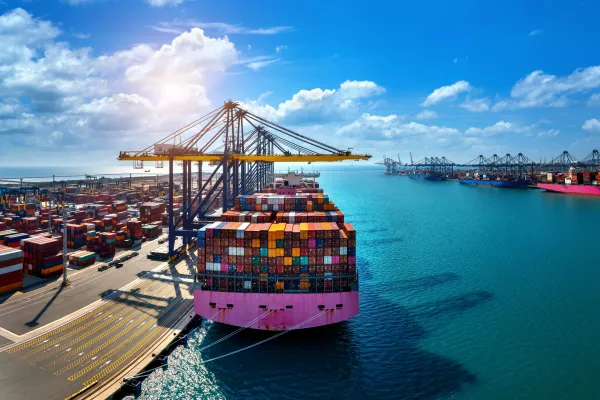
The establishment of the Bharat Container Shipping Line (BCSL) marks a strategic shift toward domestic control over global logistics. By creating a state-backed carrier, India aims to reduce its $75 billion annual outflow in foreign freight charges and protect local exporters from international shipping price volatility.
- BCSL is a high-level joint venture between major port authorities, the Shipping Corporation of India, and CONCOR.
- The initiative is supported by a ₹15,000 crore integrated ecosystem focused on domestic container manufacturing and vessel acquisition.
- Exporters will gain access to stable freight pricing and assured shipping capacity on critical trade routes across Asia and the Red Sea.
3. Budget 2026 Reshapes Customs Duties to Support Manufacturing and Service Exports
The 2026-27 Union Budget introduces structural changes to customs and GST intended to streamline trade operations and improve liquidity for SMEs. Key updates include the removal of duties on essential capital goods and a major clarification that classifies intermediary services as exports, easing the tax burden on service providers.
- Duty-free import limits for raw materials used in seafood processing have been tripled from 1% to 3% of export value.
- Intermediary services now officially qualify as "exports of services" under revised GST place-of-supply rules, reducing long-standing litigation.
- Customs advance rulings will now remain valid for five years, providing exporters with significantly longer-term policy certainty.
4. New Minimum Import Price for Umbrellas Protects Domestic SME Manufacturers
To curb the influx of low-cost foreign goods and encourage local production, the Directorate General of Foreign Trade (DGFT) has restricted the import of finished umbrellas. Only products that meet a specific value threshold will now be allowed free entry, providing a protective shield for Indian small-scale manufacturers.
- A minimum import price (MIP) of ₹100 per piece has been imposed on all finished umbrella imports.
- Shipments valued below this ₹100 CIF threshold are now classified as "restricted," requiring specific licenses for entry.
- Exemptions from these restrictions remain in place for manufacturers using Advance Authorizations or operating in SEZs and EOUs.
5. Indian Seafood and Textiles to Enter EU Duty-Free Under New Agreement
A landmark free trade agreement with the European Union is set to eliminate high tariffs on critical Indian export categories such as marine products and garments. This deal provides a strategic reset for these industries, allowing Indian goods to compete more effectively against regional rivals in the European market.
- The European Union will scrap its 26% tariff on Indian seafood imports, providing an immediate boost to coastal processing hubs.
- Indian textiles, leather goods, and engineering products will gain preferential, duty-free access to all EU member states.
- The pact establishes a new cooperation platform for climate-aligned trade, focusing on the export of low-carbon technologies and green products.
Next week, businesses should closely monitor the DGFT's specific guidelines on the new digital trade facilitation rules and updated shipping schedules for the national carrier.
Source: Economic Times