Import by Air vs Sea: Cost, Time & Documentation Compared (Practical Guide for Indian Importers)
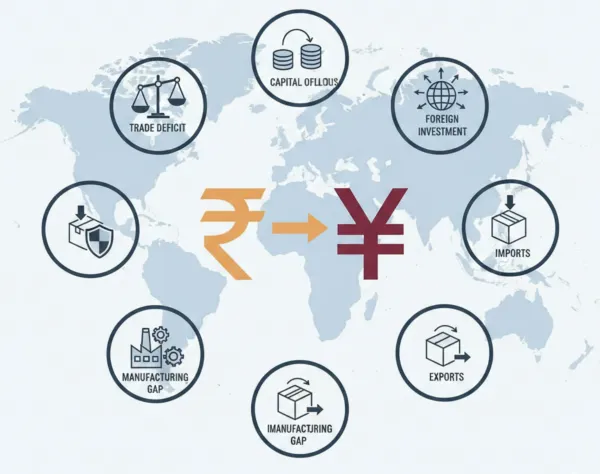
Many importers compare only the base freight quote (air rate per kg vs ocean freight per container) and ignore port/airport handling, CFS/ICD charges, demurrage/detention and the duty‑plus‑IGST stack that is calculated on CIF value (including freight). These extra layers often decide whether a shipment is actually profitable, especially for lower‑margin products.
In India, customs duty and IGST are calculated on the assessable value, which includes product cost + freight + insurance + specified handling charges. This means choosing a more expensive mode (air) can increase not just freight but also the duty and tax outflow at the time of clearance.
At the same time, 20–35 days at sea versus 3–7 days by air on key India–EU/US lanes can dramatically change inventory days, customer SLAs and lost‑sales risk for fast‑moving categories like electronics, fashion and D2C launches. So the “cheapest freight” is not always the best business decision.
Air vs sea freight: quick comparison (India–EU/US)
Simple numeric example – same shipment by air vs sea
Assume you import 1,000 kg of consumer electronics at ₹5,000 per kg (CIF base before ocean/air freight choice), total product value ₹50,00,000.
- If shipped by sea, an example from Indian trade shows freight around ₹50 per kg (₹50,000 total).
- If shipped by air, the same example pegs freight at roughly ₹250 per kg (₹2,50,000 total).
Ignoring other local charges for simplicity:
- CIF by sea - ₹50,00,000 + ₹50,000 = ₹50,50,000.
- CIF by air - ₹50,00,000 + ₹2,50,000 = ₹52,50,000.
On both, India’s customs duty and IGST are applied on the assessable (CIF‑based) value with BCD, SWS and IGST layered one over another. In worked customs examples, taxes alone can add 25–35% over CIF, often dwarfing the ocean freight but becoming significantly higher when your assessable value increases due to expensive air freight.
The takeaway: air versus sea is not just a freight line, it changes your duty/IGST base and therefore the total cash you block at clearance.
For a deeper understanding about customs duty, please read this blog on "How Customs Calculates Duty on Imports".

Documentation: air vs sea and impact on delays
Sea import documentation (into India)
Key documents for a typical sea import include:
- Commercial Invoice and Packing List
- Bill of Lading (House and Master BL)
- Sea Import General Manifest (filed by the carrier)
- Bill of Entry filed with Indian Customs
- Delivery Order (DO) issued by shipping line/NVOCC
- Insurance policy or certificate, where applicable
- Product‑specific certificates (BIS, FSSAI, PQ, AQCS, etc.) depending on HS code
Air import documentation
For air imports, the stack is similar but with air‑specific documents:
- Commercial Invoice and Packing List
- Air Waybill (Master AWB and House AWB)
- Cargo manifest filed by the airline/consolidator
- Bill of Entry for customs clearance
- KYC documents of importer (IEC, GST, PAN, authorisations)
- Certificates and licences where required (BIS, DGFT licences, etc.)
Common documentation mistakes that cause demurrage
Mistake #1: HS code mismatch between invoice, BL/AWB and Bill of Entry, triggering reassessment and examination.
Mistake #2: Incomplete KYC or expired authorisations (IEC, GST registration, AD code not updated at port/airport).
Mistake #3: Inconsistent consignee/notify details across documents, especially in third‑party or drop‑shipment structures.
Mistake #4: Missing licences or product approvals (BIS, FSSAI, PQ) for regulated goods.
Mistake #5: Incorrect Incoterms on invoice vs actual freight arrangement, confusing who pays which charges.
Mistake #6: Late filing of Bill of Entry or delayed DO collection, leading to avoidable storage days at port/CFS/airport.
Mistake #7: Not pre‑sharing documents with CHA, so errors surface only after cargo lands.
Free days and demurrage behaviour, Sea Vs Air
Practical decision framework: how should an importer choose?
When you evaluate air vs sea for a specific shipment, run through this checklist:
- Shipment value per kg: If freight plus duty will exceed 15–20% of product value, sea is usually better unless margins are very high.
- Urgency / customer SLA: Hard launch dates, promotional windows and line‑down risks favour air, routine replenishment favours sea.
- Product type: Perishable, fragile, theft‑prone or fashion‑sensitive goods lean towards air, bulky raw materials and machinery lean towards sea.
- Duty structure and ADD risk: High BCD/IGST and ADD amplify the impact of higher CIF values from air freight.
- Cash‑flow tolerance: If your balance sheet cannot handle 30–45 days of cash lock‑in plus duty, use air or bonded structures even if basic freight is higher.
FAQs
Is air freight always more expensive than sea when you consider total cost?
No. Air is usually 4–6× costlier per kg, but for high‑margin products with fast turnover, the extra cost can be offset by lower stock‑out risk and faster cash rotation. When you add demurrage, detention and interest on inventory, sea is not always cheaper in effective terms.
For 50–200 kg shipments, should I choose courier, air cargo or LCL sea?
For 0.5–30 kg, courier is usually best because of door‑to‑door simplicity. Between roughly 50–200 kg, air cargo through a forwarder often beats courier on per‑kg rate and beats LCL sea on speed, LCL makes sense mainly when freight must be minimized and lead time is flexible.
How does my choice of Incoterms (FOB vs CIF vs DAP/DDP) affect the air vs sea decision?
Under FOB, you control the freight and can choose air or sea based on your optimisation, under CIF/CIP the seller controls main leg freight, but duty is still calculated on CIF so your tax impact remains mode‑dependent. Under DAP/DDP, overseas suppliers or marketplaces bundle freight and duty, reducing your visibility but not changing the underlying economics.
Do documentation and customs procedures change significantly between air and sea?
The core customs concepts (Bill of Entry, HS code, valuation, duty calculation) are similar, but sea needs BLs, manifests and often more complex CFS/ICD coordination, whereas air uses AWBs and airport cargo procedures. In both modes, classification, valuation and licences drive whether your cargo is flagged for examination.
How can I reduce demurrage/detention whether I use air or sea?
Pre‑share documents with your CHA, file Bill of Entry early, and ensure AD code, licences and KYC are in place at the chosen port/airport. For sea, monitor free days at port, CFS/ICD and with the shipping line, for air, track airport ground‑rent slabs and avoid weekends/holidays without planning duty payment.
Can I mix modes, like part air and part sea, for the same product?
Yes. Many importers bring an initial urgent lot by air and the balance by sea to balance speed and cost. This works well for new launches and seasonal demand where you need some stock immediately but can wait for bulk quantities.